I don't get excited easily about ingredients anymore.
After years of formulating, you develop a healthy skepticism. Every oil has a marketing story. Every supplier has a superlative. I've learned to go straight past the claims and into the research — the peer-reviewed, published, nobody-is-selling-anything kind — and let that tell me what something actually is.
So when I stumbled onto Camelina sativa while deep in canine skin and coat research for the Shepherd Line, I didn't get excited. I got curious. And then I kept pulling the thread. And the more I pulled, the more I understood why this oil has been hiding in plain sight — not because it doesn't deserve attention, but because of decisions made decades ago that had nothing to do with what was actually best for your skin.
This is that story.
3,000 Years of History. Then — Gone.
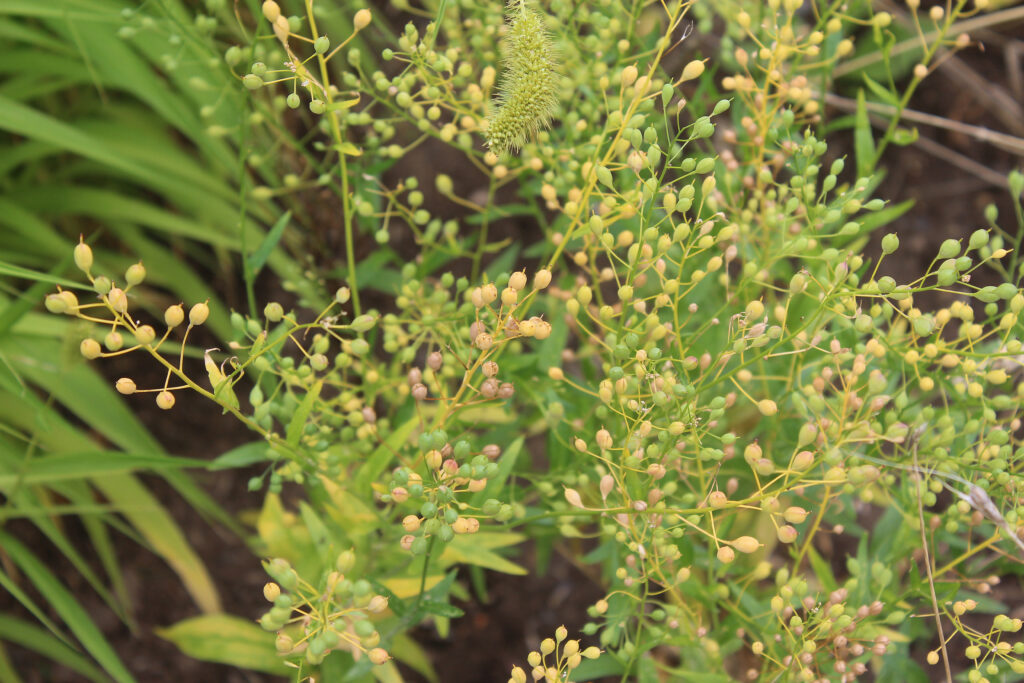
Camelina sativa. Also called false flax, German sesame, or gold of pleasure. Native to Northern Europe and Central Asia, cultivated for over 3,000 years across Celtic and Bronze Age civilizations. Its seeds were cold-pressed for oil. Its press cake fed livestock. Its stems made brooms. Nothing was wasted.
It was, by every measure, a complete and functional crop — and the oil it produced was nutritionally exceptional. Rich in omega-3 alpha-linolenic acid. Loaded with all four forms of Vitamin E. Balanced across omega-3, 6, and 9 in a profile almost nothing else in nature replicates.
And then, in the mid-twentieth century, it largely disappeared.
Not because anything was wrong with it. Not because something better came along. It disappeared because soy and canola were more profitable at industrial scale — and once the machinery of modern agriculture committed to those crops, everything else got pushed to the margins.
That's it. That's the whole reason. Camelina didn't lose on merit. It lost on volume.
What Corporate Agriculture Chose — And What We Lost
To understand why Camelina is still relatively unknown, you have to understand how the global oil supply actually works.
Industrial agriculture doesn't optimize for nutritional complexity or skin barrier science. It optimizes for yield per acre, shelf stability at mass scale, and supply chain predictability. Soy and canola checked every one of those boxes. They could be grown on millions of acres, processed through existing infrastructure, and delivered to manufacturers in quantities that made global distribution possible.
Camelina couldn't compete on those terms. It grows well — actually thriving on marginal land with minimal inputs, which makes it genuinely sustainable — but it doesn't scale the same way. It requires careful cold-press handling to preserve the very compounds that make it valuable. It can't be industrialized without destroying what makes it worth using in the first place.
So the big players never came. And without mass production infrastructure behind it, the beauty industry never got the memo. You cannot build a multinational skincare brand around an ingredient you can't source in container quantities. So they didn't. They reached for the oils that were already there in volume — many of which are nutritionally inferior by direct comparison — and Camelina stayed on the margins.
That's sad to know. And it's important to know. Because it explains everything that comes next.
The Numbers That Stopped Me
Before I get to how it ended up in the horse aisle — here is what the actual research shows about what's in this oil, because this is what started everything.
Camelina seed oil contains 28.6–36.7% omega-3 alpha-linolenic acid (ALA). It carries 14.4–20.6% omega-6 linoleic acid. Its overall composition runs approximately 60% polyunsaturated fatty acids, 30% monounsaturated fatty acids, and 6–10% saturated fatty acids — with an n-6:n-3 ratio of 1:1.8.
For context, here is what the oils that displaced it look like by comparison:
- Canola oil: n-6:n-3 ratio of approximately 1:0.59
- Soybean oil: approximately 1:0.12
- Sunflower oil: approximately 1:0 — essentially no omega-3 at all
Camelina is in a different category. And it was pushed off the map in favor of those three.
Then there's the Vitamin E data — and this is the number that genuinely surprised me. The total tocopherol content of camelina oil is 972.3 mg/kg. Flaxseed oil — already considered an exceptional omega-3 source and the current gold standard in equine and canine nutrition — contains 588.7 mg/kg. Camelina carries nearly double the Vitamin E of flaxseed oil. In the same ingredient that already wins on the omega-3 profile.
That's not a marketing claim. That's a direct comparison from a peer-reviewed University of Guelph master's thesis, citing Grajzer et al. (2020).
(Source: Richards, T.L., University of Guelph MSc Thesis, 2022)
Vitamin E is what stabilizes the oil against oxidation — meaning camelina has a better shelf stability than flaxseed despite its high PUFA content. It's also what protects skin cells from free radical damage, UV-induced photodamage, and premature aging. One ingredient. Both functions. Simultaneously.
How It Ended Up in the Horse Aisle
Here is where the story gets interesting.
The equine supplement market is small enough to survive on limited supply. Horse owners and veterinary researchers are also, as a community, remarkably science-forward — they read studies, they compare fatty acid profiles, they pay attention to what the research actually says rather than what a marketing budget tells them.
So while the beauty industry looked the other way, equine researchers found Camelina. They studied it. A peer-reviewed study published in Frontiers in Veterinary Science out of the University of Guelph evaluated Camelina oil supplementation in 30 dogs over 16 weeks — measuring transepidermal water loss, inflammatory markers, and coat quality. A parallel study in horses, published in the Journal of Animal Science, confirmed the same findings across a second species. Skin barrier support. Coat quality improvement. Anti-inflammatory response. Comparable to flaxseed oil — already a recognized EFA source — across every measured marker.
(Sources: ncbi.nlm.nih.gov/pmc/articles/PMC10034026/; Journal of Animal Science, 2023)
That's the research I found when I was deep in canine skin and coat studies for the Shepherd Line — Everlasting Organics' pet care collection, born from rescuing a twelve-week-old pit mix named Scrappy who had about thirty minutes left when I got the call. If you want that story, it's here.
What those studies confirmed — and why they translate directly to human skin — is that the mechanisms being measured are the same ones at work in human skin. Transepidermal water loss is transepidermal water loss. Ceramide production is ceramide production. The biology doesn't change species by species. The equine and canine research pointed me somewhere I hadn't expected to go, and I followed it.
What the Human Skin Research Actually Shows
Once I understood what Camelina was doing in the animal studies, I went looking for the human skin data. It was there. It's been there.
A peer-reviewed study published in the Journal of the American Academy of Dermatology measured essential fatty acid levels in children with atopic dermatitis against healthy controls. The finding was direct: EFA deficits correlated with disease severity — specifically through compromised skin barrier function as measured by transepidermal water loss. The worse the fatty acid deficiency, the worse the barrier breakdown, the worse the eczema scores.
(Source: pubmed.ncbi.nlm.nih.gov/18254485/)
Earlier research published in the Journal of Investigative Dermatology established that the abnormal barrier function caused by EFA deficiency can be corrected through topical application of linoleic acid — a key fatty acid present in Camelina oil.
(Source: pubmed.ncbi.nlm.nih.gov/7373078/)
A 2024 study indexed on PubMed confirmed that fatty acids play a role in binding to filaggrin — the protein responsible for holding the skin barrier together — reducing water loss, increasing hydration, and relieving the itching and inflammation of chronically compromised skin.
(Source: ncbi.nlm.nih.gov/pmc/articles/PMC11652156/)
The Vitamin E Number That Surprised Even Me
Beyond the barrier research: Camelina oil contains all four forms of tocopherol — alpha, beta, gamma, and delta — the full Vitamin E family. At 972.3 mg/kg of total tocopherols, it carries nearly double the Vitamin E of flaxseed oil (588.7 mg/kg), which is itself considered exceptional. This antioxidant load does documented work in skin: neutralizing free radicals that cause premature aging, protecting against UV-induced photodamage, supporting cell repair, and maintaining elasticity. Its natural Vitamin E also stabilizes the oil itself against oxidation — critical when formulating with omega-3-rich ingredients that are typically vulnerable to rancidity.
(Source: Richards, T.L., University of Guelph MSc Thesis, 2022, citing Grajzer et al., 2020)
This is a clinically interesting, research-supported, genuinely exceptional oil. The beauty industry just wasn't looking because the supply wasn't there to make it commercially convenient.
Scarcity Creates Fraud. Do Your Research.
Here is something I wish someone had told me before I started sourcing this ingredient: when supply is limited and interest is growing, fraudulent suppliers rush in.
They know that most buyers — consumers and brands alike — can't yet verify what quality Camelina oil should actually look like, smell like, or perform like. They know that a certification label is often the only thing a buyer has to go on. And some of them have learned to exploit exactly that gap — presenting paper credentials that don't reflect what's actually in the bottle.
I encountered this directly in my own sourcing process. I am not going to name names or make specific claims — there is a time and a place for that conversation. But I will tell you this plainly: do not assume that a certification guarantees quality. Do not assume that because something calls itself Camelina oil, it is what the research describes. The scarcity that makes this ingredient special is the same scarcity that makes the market vulnerable to misrepresentation.
Research your supplier. Ask questions. Know what the oil should look like. Know what cold-pressed means and why it matters. A 2024 peer-reviewed comparison confirmed that extraction method significantly affects the physicochemical profile of Camelina oil — the compounds that make it therapeutically valuable are the first things destroyed by heat and solvent extraction.
(Source: ncbi.nlm.nih.gov/pmc/articles/PMC11594220/)
This is not easy to source correctly. Anyone telling you otherwise either doesn't know what they're working with or doesn't want you to know.
How Everlasting Organics Found the Right Source
It took going north. To Canada. To a cold-press producer whose oil looks, smells, and performs exactly the way the research says it should — traceable, carefully handled, and produced by people who understand what they're growing.
Not every supplier that carries a certification delivers a product that reflects the standards that certification is supposed to represent. Finding quality Camelina oil that actually matched what the research described took longer and went further than I anticipated. I refused to settle. And I won't apologize for the time that took — because what goes into an Everlasting Organics formula has to earn its place.
The oil we source is cold-pressed, traceable to its growing region, and produced under conditions that preserve the EFAs, tocopherols, and bioactives that make this ingredient worth using. That's non-negotiable.
A Note on Allergies
Because Camelina belongs to the Brassicaceae family — the same family as mustard — there is a theoretical cross-reactivity concern for anyone with a known mustard seed allergy. Health Canada's formal safety assessment of cold-pressed Camelina oil found no documented cases of allergic reaction, but the precaution exists and I'm not going to bury it.
(Source: Health Canada Novel Food Safety Assessment: Camelina Oil)
If you have a known mustard seed allergy, consult your healthcare provider before using products containing Camelina oil. For all new users — patch test first. This applies to Shepherd Line pet products as well. If your dog has known food sensitivities, check with your vet.
Where It's Going — And Why the Website Has Been Taking Longer Than Planned
This is the part I've been wanting to say out loud.
If you've noticed that the Everlasting Organics website has been slower to expand than you might have expected — this is part of why. Reformulating around an ingredient this significant, sourced to this standard, takes time. I don't add something to a formula to check a box. I add it when I know what it is, where it came from, and what it's going to do.
Camelina oil is now a foundational ingredient across the Everlasting Organics lineup. Here's where you'll see it:
The Shepherd Line — still in production, formulated from the ground up to be lick-safe and genuinely beneficial, not just technically non-toxic. Every product built around one question: would this be safe if your dog licked it off? Camelina's clinical profile for skin barrier support and anti-inflammatory response makes it a cornerstone here.
Heavenly Face, Neck & Décolletage — where its barrier-repair, anti-inflammatory, and antioxidant properties are exactly what sensitive, reactive, and maturing skin needs. This is not a carrier oil added for texture. It earns its place in every formula it goes into.
Blessings Body Care — where deep nourishment without a greasy finish is everything. Camelina's lightweight absorption profile makes it ideal for body formulations that actually sink in and do something.
And lines not yet announced — but coming.
This wasn't a single product decision. It was a formulation direction.
The Bottom Line
An ancient oil. Nutritionally exceptional. Clinically validated. Pushed off the map not by failure but by the economics of industrial agriculture. Kept alive in the equine supplement market by researchers paying attention when the beauty industry wasn't. Hard to source. Easy to fake. Worth every bit of the effort to find the real thing.
That's Camelina sativa. And it's now in your Everlasting Organics products — in every line, for every member of your family, including the ones with four legs.
More soon. And this time, the wait will make sense when you see what's coming.
Research Sources:
- Richards, T.L. — Effects of Dietary Camelina, Flaxseed, and Canola Oil Supplementation... University of Guelph MSc Thesis, 2022
- EFA deficiency and atopic dermatitis severity in children — Journal of the American Academy of Dermatology (2008)
- Topical linoleic acid and epidermal barrier repair — Journal of Investigative Dermatology (1980)
- Fatty acids, filaggrin, and atopic dermatitis — PMC (2024)
- Camelina oil and skin/coat health in dogs — Frontiers in Veterinary Science (2023)
- Cold-pressed vs. solvent-extracted Camelina oil — PMC (2024)
- Camelina oil and skin/coat health in horses — Journal of Animal Science (2023)
- Health Canada Novel Food Safety Assessment: Camelina Oil
- Camelina, the Oil Good for the Skin — darwin-nutrition.fr
- Benefits of Camelina Oil — madamelapresidente.fr
Everlasting Organics LLC | Clemmons, NC | Everlasting-Organics.com For educational purposes only. Not medical advice. If you have a diagnosed skin condition, consult your healthcare provider.

0 Comments